Tokyo Signature Itinerary: How We’d Spend 3 Perfect Days in Japan’s Most Electric City
Tokyo is one of those cities that completely overwhelms you in the best possible way.
It’s massive, fast, loud, peaceful, futuristic, traditional, and somehow all of those things exist side by side without ever feeling chaotic. One street feels like a sci-fi movie, and the next feels frozen in time.
When we first planned Tokyo, we made the mistake most travelers make:
trying to do too much.
The truth is, Tokyo isn’t a city you “complete.” The best trips here are the ones that balance the famous highlights with slower moments in between — late-night ramen stops, quiet temple walks, hidden alleyways, and neighborhoods you accidentally fall in love with.
So if you only have 3 days in Tokyo, this is the exact signature-style itinerary we’d recommend after experiencing the city ourselves.
Not rushed.
Not overly touristy.
Just the right mix of iconic Tokyo and authentic local moments.
Where We Recommend Staying for Easy Access

Stay in: Shinjuku
If you want the easiest base for a 3-day Tokyo trip, stay in Shinjuku.
Honestly, it makes everything simpler.
You’re connected to almost every major train line, which means:
- easier airport transfers,
- easier sightseeing,
- easier nightlife,
- and less wasted travel time.
But beyond convenience, Shinjuku also feels like Tokyo.
The neon streets, tiny ramen shops, hidden bars, shopping alleys, and endless energy make it one of the best introductions to the city.
Hotel We Personally Recommend:
Yes — the famous Godzilla hotel.
But the real reason we loved it was the location.
You can walk to:
- Omoide Yokocho,
- Kabukicho,
- Golden Gai,
- major train stations,
- and some of Tokyo’s best food spots within minutes.
After long days exploring, returning to Shinjuku at night genuinely became part of the experience.
Day 1 — Tokyo’s Energy & First Impressions
Morning: Ease Into Tokyo at Shinjuku Gyoen
After arriving in Tokyo, the best thing you can do is not rush immediately into the chaos.
Start slowly at Shinjuku Gyoen.
This huge garden feels like a reset button after the long flight. Quiet walking paths, ponds, traditional Japanese gardens, and skyline views somehow all exist together here.
It’s one of the calmest places in central Tokyo.
And honestly, sitting here for a while made Tokyo feel less intimidating and more exciting.
Lunch: Fuunji Ramen
If there’s one food stop we still think about constantly, it’s Fuunji.
Their tsukemen ramen is unreal.
Rich dipping broth, thick chewy noodles, tiny restaurant, long line outside — exactly the kind of Tokyo food experience you hope for.
It felt authentic without trying too hard.
Afternoon: Meiji Shrine & Harajuku
One of the things we loved most about Tokyo was how quickly the atmosphere changes.
You leave the busy streets of Shinjuku and suddenly you’re walking through towering forest pathways toward Meiji Shrine.
The contrast feels surreal.
Then only minutes later, you’re in Harajuku surrounded by:
- colorful fashion,
- quirky dessert shops,
- vintage stores,
- and crowds of stylish teenagers.
Tokyo constantly shifts personalities like this, and it never stops being fascinating.
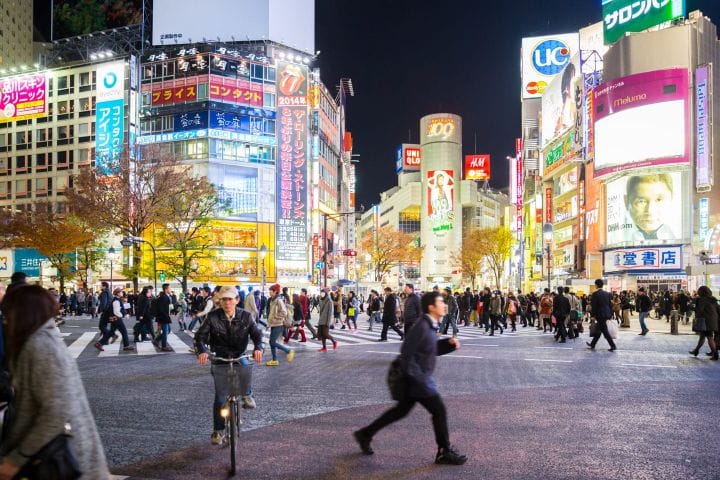
Evening: Shibuya Crossing & Tokyo at Night
Your first Tokyo night has to include Shibuya.
Seeing the crossing in person feels strangely cinematic. The lights, giant screens, music, and nonstop movement somehow feel even bigger than expected.
Our favorite moment wasn’t actually crossing the street though.
It was standing above the city watching the crowds move below while Tokyo slowly lit up for the night.
If possible, visit Shibuya Sky around sunset.
Completely worth it.
Dinner: Sushi at Uobei
End the night with fast-paced conveyor sushi at Uobei.
Affordable.
Fun.
Very Tokyo.
The sushi arrives directly to your seat on miniature high-speed rails, and somehow it never stops being entertaining.
Day 2 — Culture, Old Tokyo & Local Streets
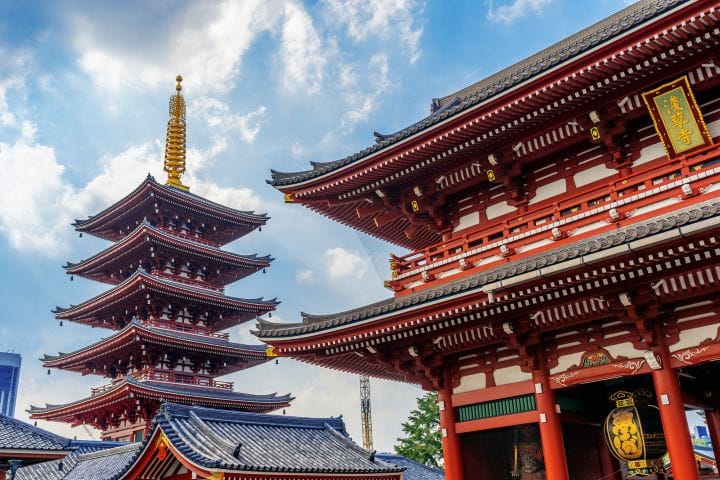
Morning: Senso-ji Temple & Asakusa
Wake up early and head to Asakusa before the crowds arrive.
This ended up being one of our favorite mornings in Tokyo.
The giant lantern gate at Senso-ji, the smell of incense, the traditional market streets — it feels like stepping into a completely different era compared to Shibuya and Shinjuku.
Grab warm melon pan or fresh street snacks while wandering through Nakamise Street.
Take your time here.
Lunch: Gyukatsu in Asakusa
Before Tokyo, we had never tried gyukatsu.
Now we genuinely think more countries need this dish immediately.
Perfectly breaded beef cutlet served rare, then finished on a hot stone grill at your table.
Simple concept.
Incredible flavor.
Afternoon: Akihabara & Ueno
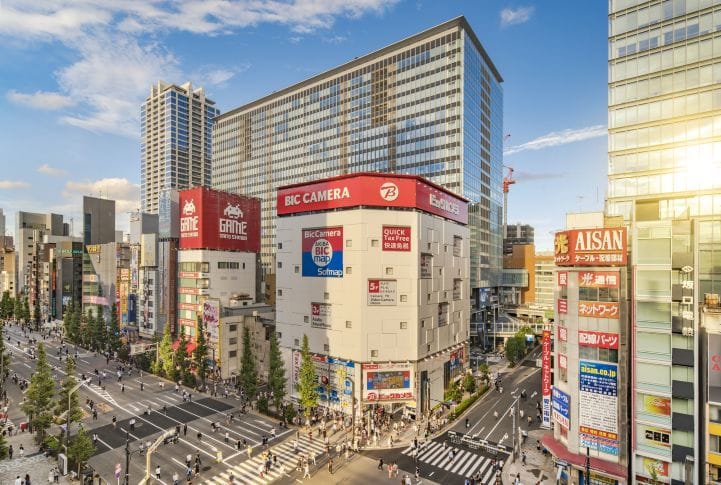
Akihabara feels like sensory overload in the best way possible.
Arcades.
Anime stores.
Retro gaming shops.
Neon signs everywhere.
Even if you’re not deeply into anime culture, the energy alone makes it worth visiting.
Later in the afternoon, head toward Ueno and Ameyoko Market for a more local Tokyo atmosphere filled with street food, market stalls, and hidden food spots.
This part of Tokyo felt rawer and more everyday compared to the polished tourist areas.
Evening: Omoide Yokocho & Kabukicho
At night, return to Shinjuku.
Walk through Omoide Yokocho — tiny lantern-lit alleyways packed with yakitori smoke and tiny bars squeezed beside each other.
This honestly felt like movie-set Tokyo.
Then wander into Kabukicho where the neon lights completely transform the area after dark.
Tokyo at night has a different personality entirely.
Day 3 — Food, Skyline Views & Final Tokyo Moments
Morning: Tsukiji Outer Market
Start your final day at Tsukiji.
There’s something unforgettable about eating fresh sushi for breakfast while surrounded by seafood vendors yelling across crowded alleyways.
Try:
- tuna sashimi,
- grilled scallops,
- tamagoyaki,
- oysters,
- wagyu skewers.
Go hungry.
Midday: Imperial Palace & Marunouchi
After the energy of Tsukiji, the Imperial Palace gardens feel surprisingly peaceful.
Wide open green spaces, old stone walls, calm walking paths — it’s a nice contrast from the nonstop movement of the rest of Tokyo.
Later, wander through Marunouchi where modern skyscrapers meet elegant streets and cafés.
This side of Tokyo feels cleaner, quieter, and more refined.
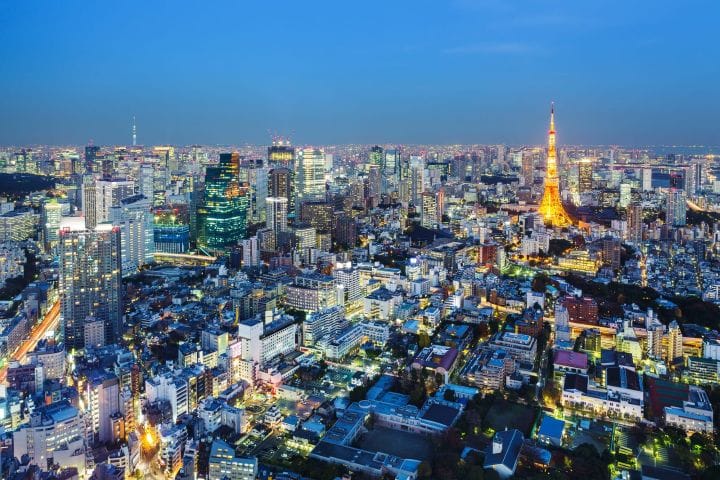
Afternoon: Tokyo Skyline Experience
Before leaving Tokyo, make time for one final skyline view.
Whether it’s:
- Shibuya Sky,
- Tokyo Skytree,
- or the Tokyo Metropolitan Government Building,
seeing Tokyo stretch endlessly into the distance really puts the scale of the city into perspective.
It’s one of those moments that stays with you long after the trip ends.
Final Dinner: Tempura at Tsunahachi
For the final meal, slow things down.
Tsunahachi in Shinjuku served some of the best tempura we had in Japan — incredibly light batter, perfectly fried seafood and vegetables, and a traditional atmosphere that felt timeless.
It ended up being the perfect final dinner before leaving Tokyo.
Travey Club Insights
What surprised us most about Tokyo wasn’t just the landmarks.
It was how every neighborhood felt like a completely different city:
- Shinjuku felt electric,
- Asakusa felt historic,
- Shibuya felt modern,
- Ueno felt local,
- Ginza felt elegant.
And somehow all of it works together perfectly.
Three days in Tokyo will never feel like enough.
But if you balance the major highlights with slower local moments, you’ll leave understanding why so many people become obsessed with this city after just one visit.
Travey Club is your personal travel planning partner, dedicated to crafting truly bespoke itineraries shaped around how you travel. We believe every journey is unique—no single template, and no purely AI-generated plan, can fit all travel needs. Rather than booking flights or hotels, we focus on thoughtful, human-led planning for our members, working alongside trusted travel agents who manage reservations. Our itineraries highlight key experiences, while Travey Club brings them together through personalized insight, expertise, and attention to detail—ensuring every trip feels intentional, seamless, and distinctly yours.
A shirt with a retro feel can be a great conversation starter. A shirt with a comfortable fabric is a must-have. Searches for Chelsea football shirt often lead to questions about measurement checks and size-chart reading, which can be answered with concise product details. A shirt with a durable print will look good for many wears.
Look at our three days Tokyo Itinerary : Travey Club